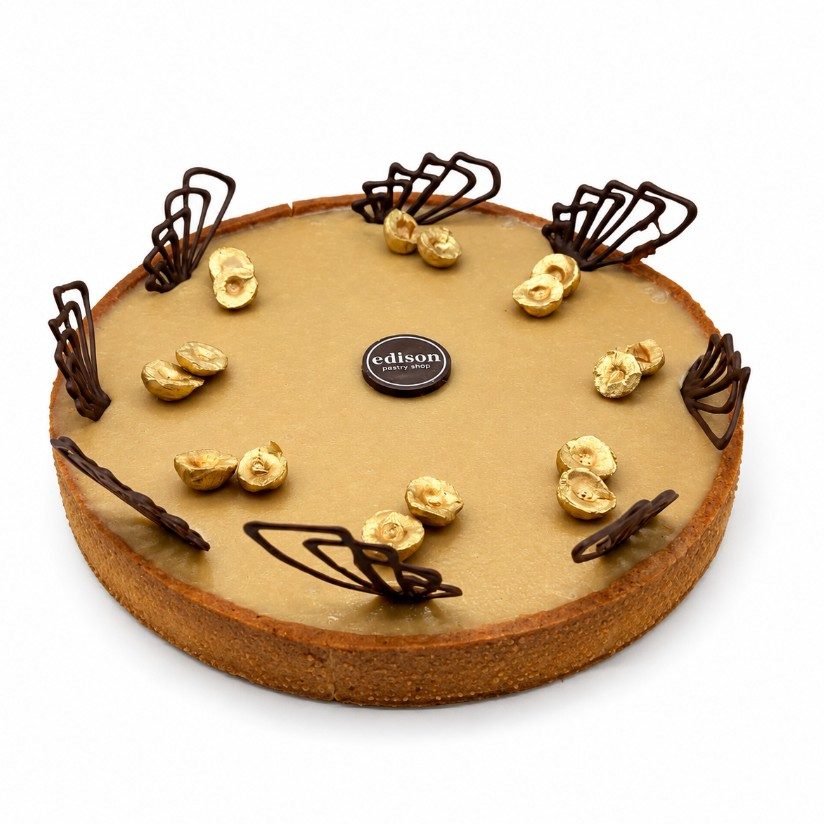
Coffee Tart for a Special Occasion
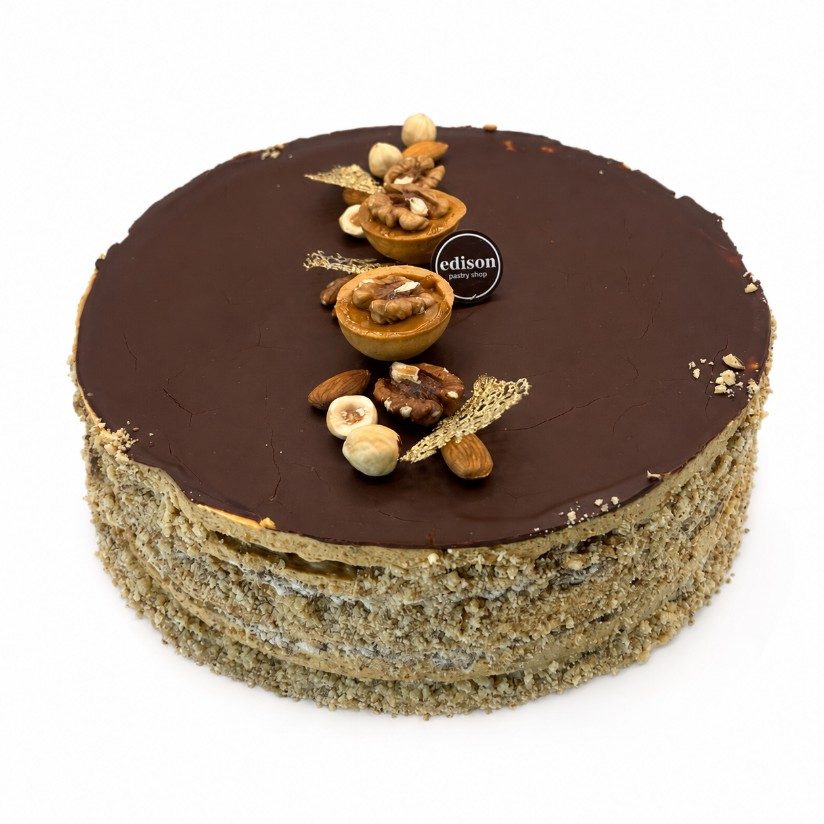
The smallest dessert among the cakes and the one that feels most like a “coffee shop” treat: a crisp almond sablé, frangipane with whole hazelnuts, and silky coffee ganache.
What It Tastes Like
The shortcrust pastry base is crisp and buttery, while the frangipane inside is a soft almond layer with whole nuts. The coffee ganache on top is thick, with a pronounced bitter note. It’s not very sweet—this is a dessert with a strong coffee character.
What Occasions It’s Perfect For
Small celebrations, business meetings, romantic dinners, gifts, or tea parties for two to four people. Thanks to its compact size, it’s a great choice when a large cake would be too much.
Weight and Servings
A whole tart weighs 0.7 kg and yields 8 servings of approximately 100 g each. It’s the smallest dessert in the catalog: designed for a group of four to six people.
How to Order in Kharkiv
The price for a whole tart is 1000 UAH, and for a slice, 125 UAH. It’s made to order for your date; please place your order at least two days in advance. Delivery within Kharkiv or pickup available.
Note: This product contains nuts—please let us know if any of your guests have allergies.
The History of Frangipane
The almond cream inside a tart is called frangipane, and the story behind this name is not about cuisine, but about perfume.
The Marquise’s Gloves
In the 16th century, an Italian aristocrat named Muzio Frangipani lived in Paris. He is credited with inventing scented gloves: the leather was soaked in a mixture made from bitter almonds. The scent became fashionable, and the fragrance itself came to be known by the marquis’s surname.
French pastry chefs later recreated this scent in an almond cream—and the name stuck. It is precisely frangipane that forms the basis of the classic “King’s Cake,” which is baked in France on Epiphany.
Sablé and Shortcrust Dough
The base of the tart is pâte sablée, a dough whose name means “sandy.” It truly crumbles like sand: the butter is rubbed into the flour before any liquid is added, preventing gluten from forming. That is why sablé is crisp rather than chewy.
Coffee, the Latecomer
Coffee found its way into European desserts later than the two previous ingredients—in the 18th and 19th centuries, when coffeehouses became a common sight in cities. It paired with almonds almost immediately: the bitterness of the coffee and the sweet nutty cream balance each other out without any additional ingredients.

 ~2.3 kg