“Esterházy” Cake for the Holiday Table
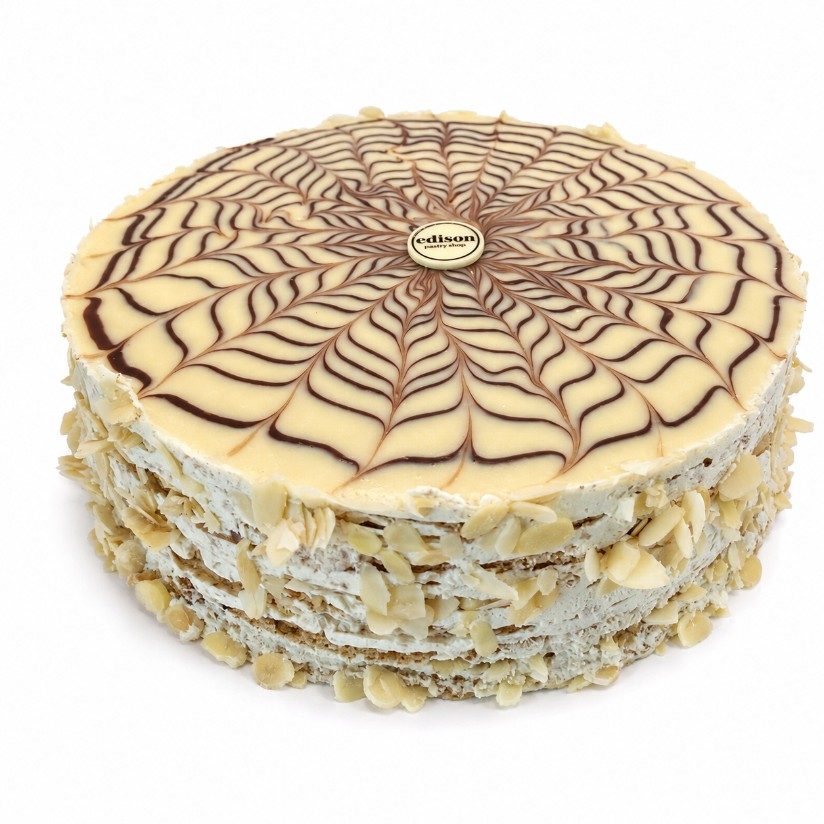
“Esterházy” is a case where a cake that looks simple turns out to be the most complicated to make. It contains no sponge cake: instead of cake layers, it features thin nut meringues that are baked separately, slowly and for a long time—otherwise, they won’t achieve that signature crunch. Between them is a delicate cream made with condensed milk, and on top is a classic white spiderweb pattern.
What Does It Taste Like?
The flavor is based on almonds, walnuts, and hazelnuts all at once, so the nutty note here is deep, not just decorative. The cream made with condensed milk and butter softens the flavor, while white and dark chocolate add depth, and the almond flakes on the sides provide another layer of crunch. The cake isn’t cloying, but it is rich: you eat it slowly, in small bites.
For Whom and for What Occasion
This is an “adult” cake for a table where flavor is valued over flashy decor. It’s perfect for anniversaries and birthdays, wedding anniversaries, meetings with parents, corporate parties and business events, as well as Christmas and New Year’s celebrations. It also makes a great gift: “Esterházy” is a well-known and respected brand.
Weight and Servings
A whole cake weighs 1.4 kg and yields 12 servings of approximately 120 g each. Because the cake is so rich, the slices are smaller than those of sponge cakes, but this is more than enough—it serves a group of up to twelve people.
How to Order in Kharkiv
The price for a whole cake is 1320 UAH, and for a slice is 110 UAH. The cake is baked fresh for your event, so please place your order at least two days in advance. We offer delivery within Kharkiv and pickup from our cafes.
Please note: This cake contains nuts—if any of your guests have allergies, please let us know in advance.
The History of the “Esterházy” Cake
The cake is named after Pál Antal Esterházy—a Hungarian prince, diplomat, and Hungary’s first foreign minister in the mid-19th century. He did not bake cakes himself: the dessert was created in the late 19th century by Budapest pastry chefs and named after the influential patron, as was customary at the time.
Hungary or Austria
Both Budapest and Vienna claim the “Esterházy” as their own—both cities were part of the same empire at the time, and they shared a common school of pastry arts. The debate continues to this day, and there is no definitive answer: the recipe spread through the coffeehouses of Austria-Hungary faster than anyone could establish its authorship.
Where Does the Pattern Come From?
The white icing with a chocolate web pattern isn’t just decoration for the sake of decoration—it’s the cake’s signature. The pattern is created while the icing is still warm: thin circles are drawn with chocolate and pulled from the center to the edges. The “Esterházy” is recognized by this pattern alone—and that is precisely why it is almost never made any other way.

 ~2.3 kg