“Eclair” Cake for a Special Occasion
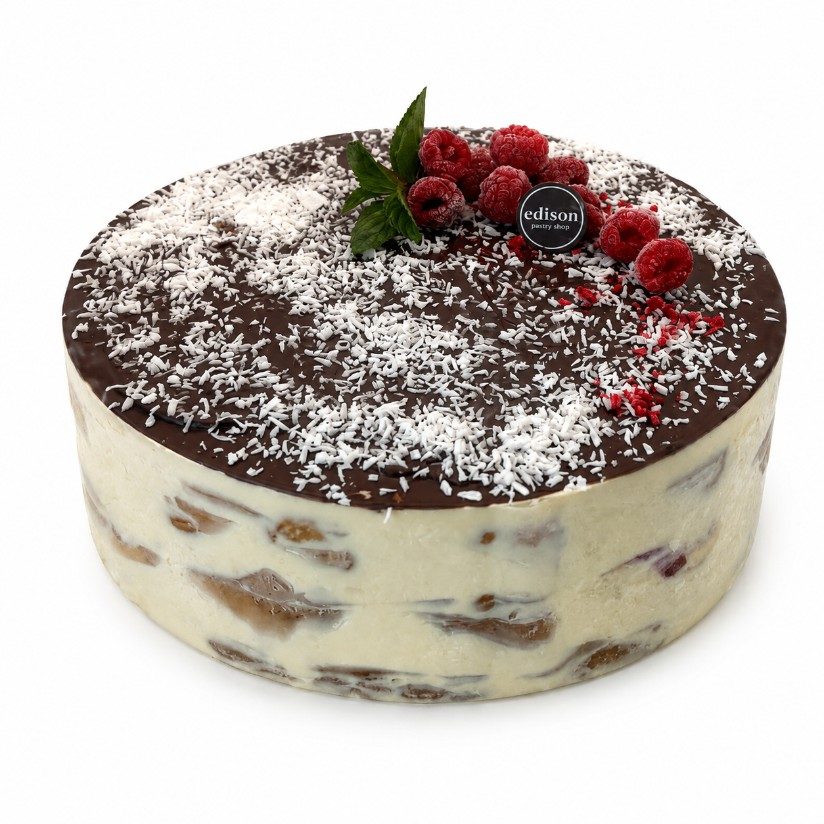
Instead of the usual cake layers, this cake features profiteroles—small balls of choux pastry filled with cream. The cake is assembled from them like a brick wall, so when you cut into it, you see the structure rather than even layers. It looks impressive and festive, and it’s easy to eat: each ball is a separate bite of delight.
How Does It Taste?
The cream is made with white chocolate—creamy, smooth, and without any cloying sweetness. The raspberries inside add a berry tartness that keeps the flavor from becoming heavy, while dark chocolate and coconut flakes provide contrast. The choux pastry itself is barely sweet, so the cake turns out balanced rather than overly sugary.
What Occasions It’s Perfect For
The “Éclair” works well at events with lots of guests where the cake is cut on the go: birthdays, children’s parties, graduations, office parties, and cocktail receptions. It’s easy to break apart with your hands; it doesn’t ooze or fall apart on the plate. It’s also appropriate for an adult gathering—thanks to the raspberries, the flavor is sophisticated rather than “childish.”
Weight and Servings
A whole cake weighs 1.7 kg and yields 12 slices, each weighing approximately 140 g. It’s one of the largest in our catalog: enough to serve a group of up to twelve people.
How to Order in Kharkiv
The price for a whole cake is 1500 UAH, and a slice is 125 UAH. The cake is made to order for your date—please place your order at least two days in advance. Delivery within Kharkiv or pickup from our cafes.
The History of Choux Pastry and Profiteroles
This cake is made of profiteroles, which are among the oldest pastries in European cuisine. The choux pastry used to make them is unlike any other: the flour is cooked in hot water with butter, and the dough rises not from yeast or baking powder, but from the steam inside.
The 16th Century and a Florentine Chef
According to the traditional account, choux pastry was brought to France by the Italian chef Panterelli, who arrived as part of Catherine de’ Medici’s entourage in 1533. His “pâte à Panterelli” gradually changed in name and recipe until it became what the French call pâte à choux—“cabbage dough”—due to the resemblance of the finished balls to small cabbage heads.
From Profiteroles to Éclairs
The word “profiterole” originally meant something entirely different—a small reward given to servants. Its culinary meaning took hold later, and the classic form of both profiteroles and éclairs was established in the early 19th century by Marie-Antoine Carême—the very same pastry chef who standardized most classic French desserts. Modern profiteroles are a product of our era, but the dough used in them is the same as it was five centuries ago.

 ~2.3 kg