“Napoleon” Cake for Any Celebration
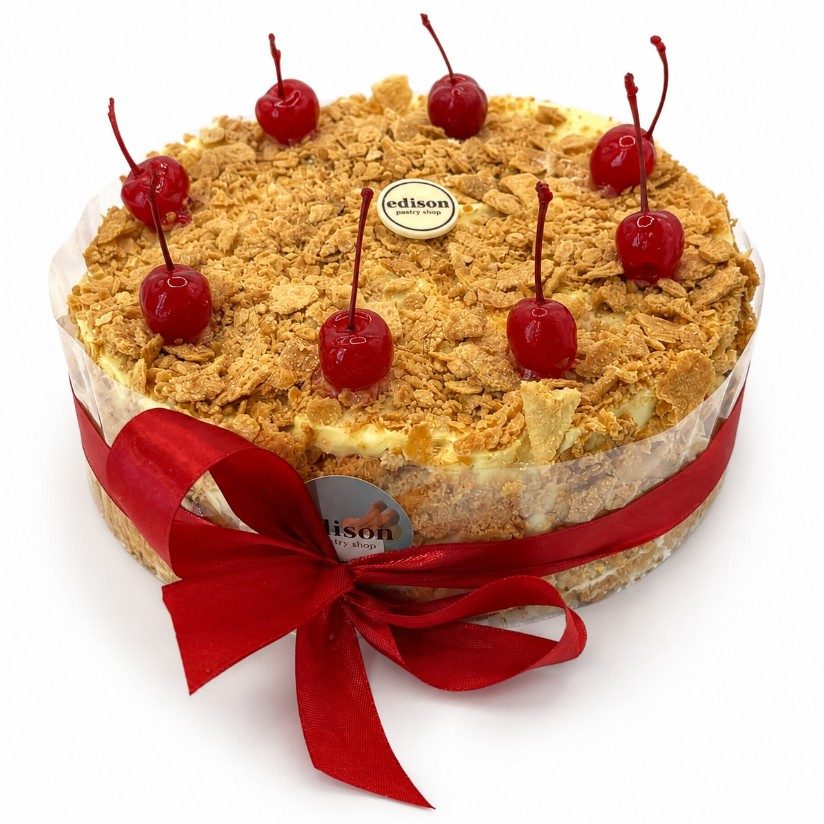
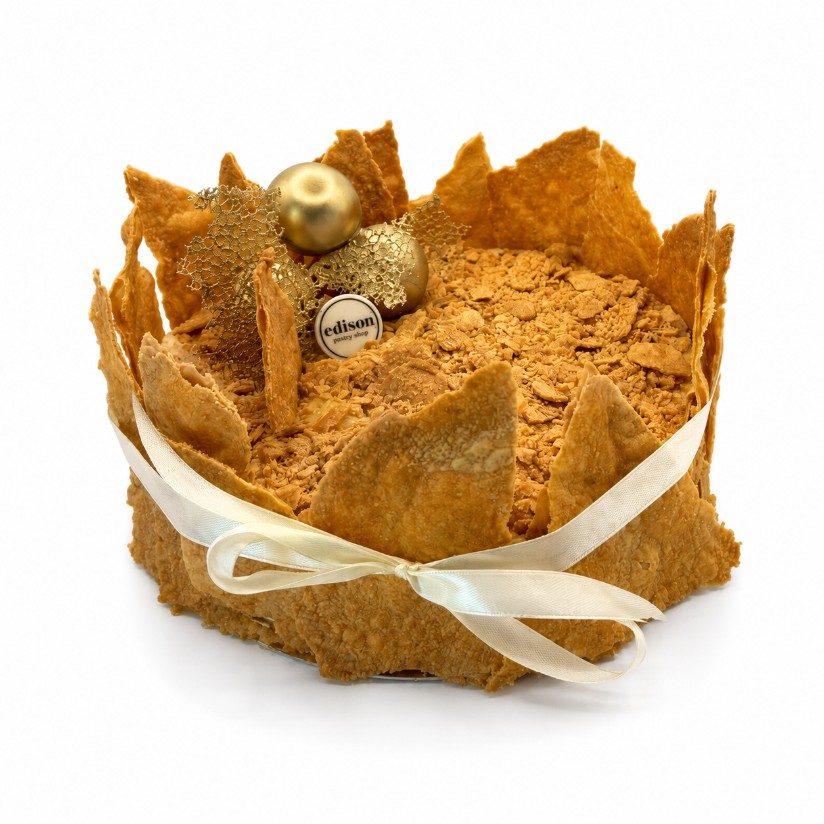
The Napoleon cake needs no introduction: people either love it from childhood or fall in love with it from the very first bite. We make it the traditional way—we roll out the dough thinly, bake each layer separately, and then let the cake rest so the layers have time to soak up the cream. That’s exactly why a real “Napoleon” can’t be made in an hour, and that’s exactly why it turns out soft, not dry.
What Does It Taste Like?
The foundation consists of the thinnest layers and plenty of milk-based cream with a delicate, silky texture. The cream is more creamy than sweet, so the cake doesn’t get cloying even after the second slice. A classic “Napoleon” contains neither alcohol nor a sharp tartness: the flavor is mild and approachable, making it a treat enjoyed by both children and older guests alike.
What Occasions Is It Suitable For?
This is a versatile cake for a table where different generations gather. It’s ordered for birthdays and milestone celebrations, wedding anniversaries, graduations and baptisms, for New Year’s and Christmas feasts, for International Women’s Day, for office parties, and simply for Sunday dinner. When you don’t know your guests’ tastes in advance, a classic is the safest choice.
Weight and Servings
A whole cake weighs 1.7 kg and yields 8 full-sized slices, each weighing approximately 200 g. It’s more than enough for a group of six to eight people; for ten to twelve guests, it’s better to order two cakes or supplement the table with pastries. If you’d like to try a slice first, our “Napoleon” cafes sell it by the slice.
How to Order “Napoleon” in Kharkiv
The price for a whole cake is 760 UAH, and for a slice is 95 UAH. The cake is made fresh for your event, so please place your order at least two days in advance. We offer delivery within Kharkiv and pickup from our cafes. You can pay by card online or upon delivery.
The History of the “Napoleon” Cake
Despite its name, the cake isn’t French—at least not in the form we know it here. Its base, puff pastry with cream, is known in France as “mille-feuille,” meaning “a thousand leaves”: recipes for such cakes appear in French cookbooks as early as the 17th century, and Marie-Antoine Carême gave the dessert its classic form in the early 19th century.
Where Did the Name Come From?
The most common version dates back to 1912, when the Russian Empire was widely celebrating the centennial of its victory over Napoleon. To mark the anniversary, pastry chefs baked small puff pastry pastries cut into triangles—their shape resembled the famous bicorne hat of the French emperor. The name stuck and quickly came to be applied to the large cake as well.
There is also a second version, purely linguistic: in France, there was a pastry called “napolitain,” meaning “Neapolitan,” and in foreign pronunciation, “napolitain” gradually became “napoleon.” Both stories are documented, and neither has definitively prevailed.
How It Became a Home-Cooking Classic
In the 20th century, the “Napoleon” evolved from a restaurant dessert into the quintessential home-baked cake: the cake layers were baked for the whole family, the cream was cooked in a saucepan, and the cake was always left in the refrigerator overnight to soak. That’s where the belief comes from that yesterday’s “Napoleon” tastes better than a fresh one. We use the same principle, only in the pastry kitchen.

 ~2.3 kg