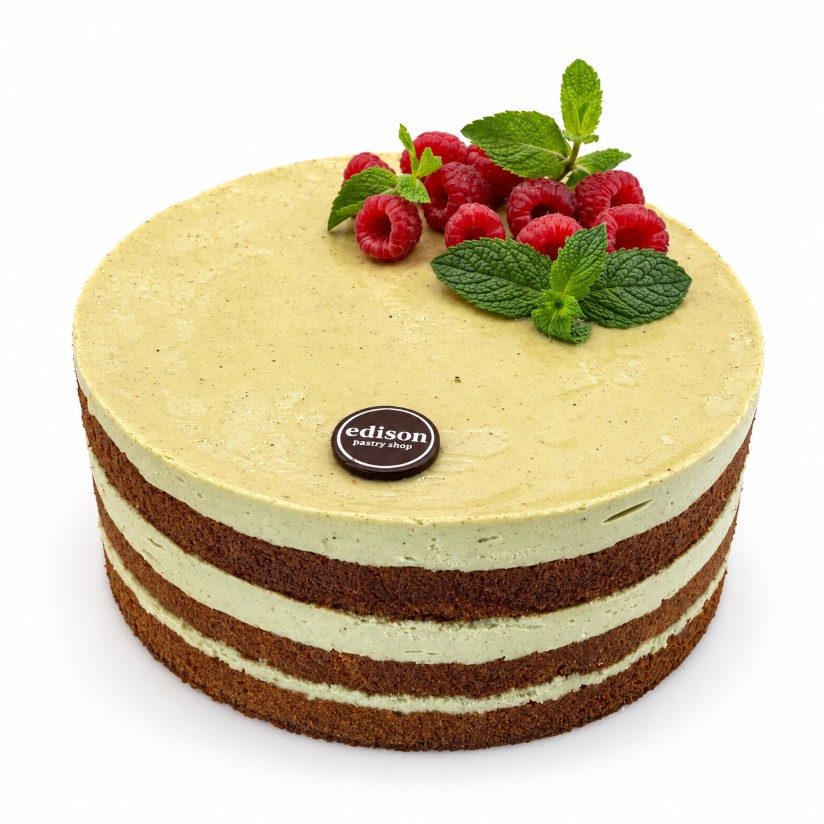
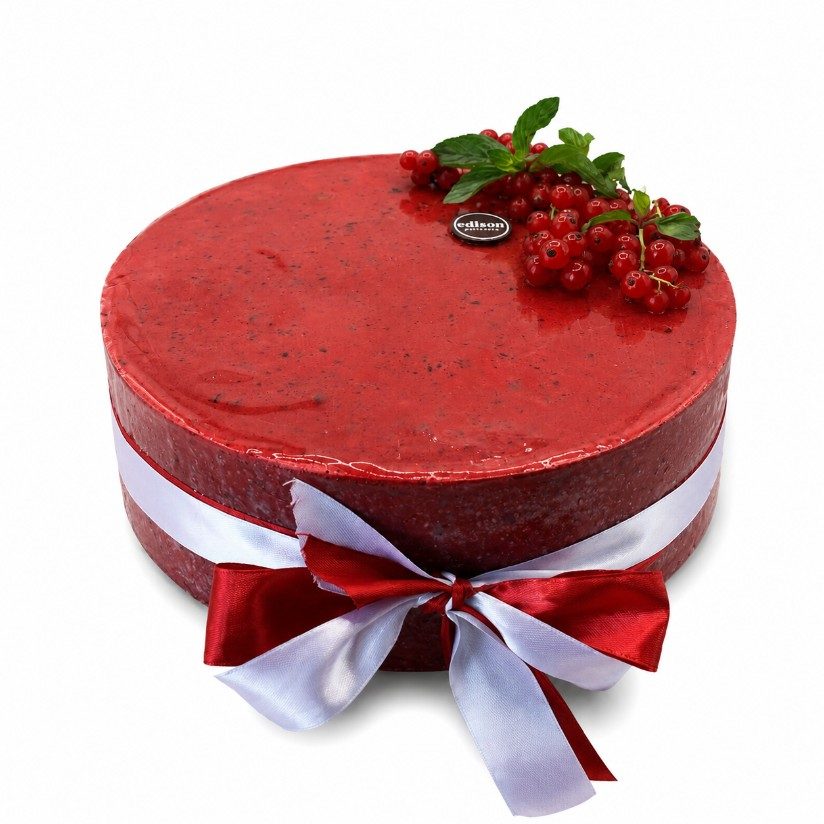
“Currant–Mango” Mousse Cake for a Summer Celebration
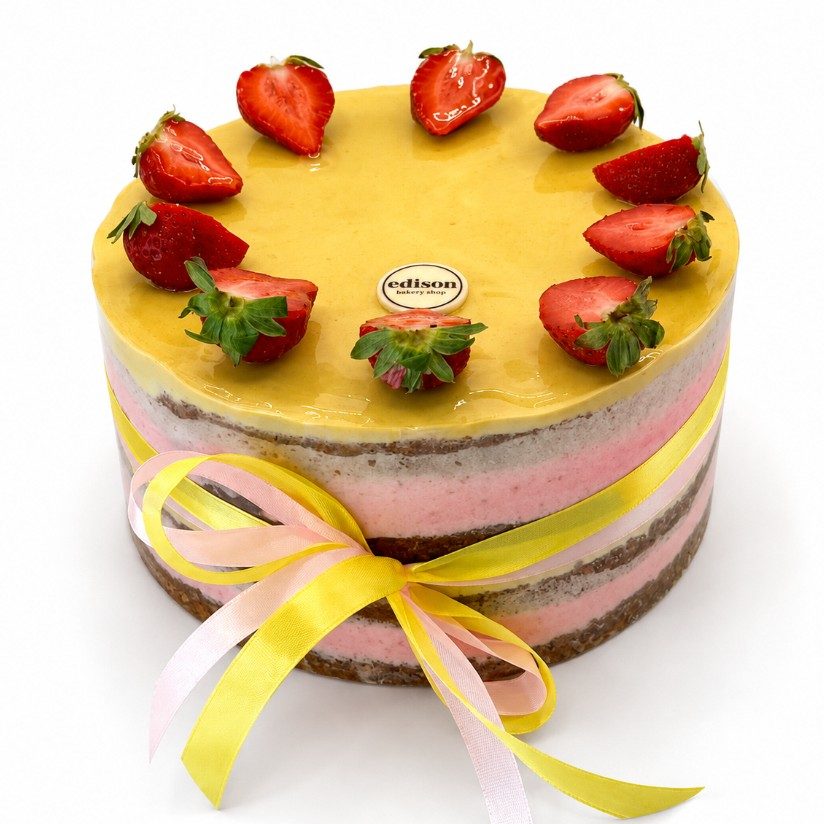
This isn’t a sponge cake in the traditional sense, but rather a mousse: a light, whipped base that melts in your mouth without leaving you feeling heavy. The currants and mango aren’t blended together here—you can taste them separately, with the tartness and sweetness alternating.
How It Tastes
The currants provide a bright, fresh tartness, while the mango offers a rich tropical aroma and a gentle sweetness. The mousse-like texture makes the flavor airy: the cake feels lighter than it looks, so you can finish it even after a hearty meal. This is a dessert for those who find classic buttercreams too heavy.
What occasions is it suitable for?
It’s perfect for the warmer months: summer birthdays, outdoor weddings and engagement parties, graduations, bachelorette parties, and children’s parties. It also works well at celebrations with plenty of food—after a hearty dinner, a mousse cake doesn’t feel like too much.
Weight and Servings
A whole cake weighs 1.9 kg and yields 12 slices, each weighing approximately 160 g. It’s one of the largest in our catalog, so feel free to plan for a group of up to twelve guests.
How to order in Kharkiv
The price for a whole cake is 1440 UAH, and a slice is 120 UAH. We prepare it for your specific date, so please place your order at least two days in advance. We offer delivery within Kharkiv and pickup from Edison coffee shops.
The History of Mousse Cakes
Mousse cakes are a relatively new category. The French word “mousse” means “foam,” and initially, it referred not to a dessert but to a method: a whipped mixture that holds its shape thanks to air rather than flour.
It All Started with Chocolate Mousse
The first mousses were described in French cookbooks from the 18th and 19th centuries, and chocolate mousse became established as a distinct dessert in the 19th century. For a long time, it was served in a bowl rather than as a cake: the mousse simply wouldn’t hold its shape.
How Mousse Became a Cake
Everything changed with the school of modern French dessert-making in the second half of the 20th century. Pastry chefs learned to stabilize the mousse and freeze it in silicone molds, adding a thin sponge cake base and a crispy layer—and thus the entremets, a multi-layered mousse cake, was born. That’s also where the mirror glaze originated—it’s hard to imagine this genre without it today. The combination of tart berries with tropical fruits also comes from that era: in mousse, the flavors do not mix but lie in layers, allowing you to bring together elements that would clash in a sponge cake.

 ~2.3 kg