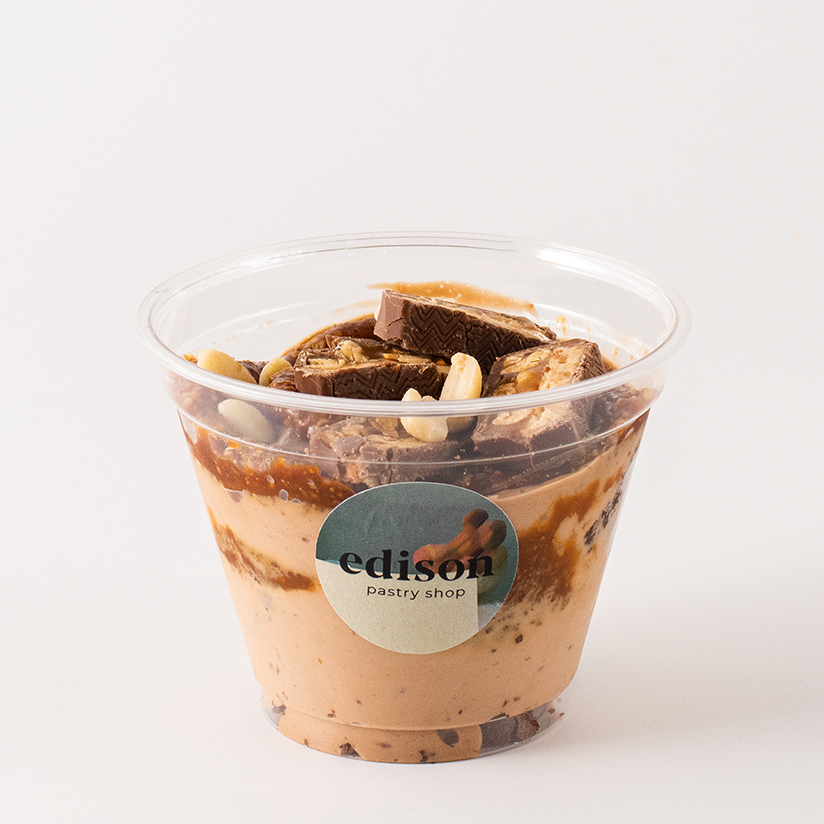
“Snickers” in a glass—a dessert for a special occasion
Chocolate sponge cake, caramel, and peanuts in individual servings. A combination of flavors and textures that works flawlessly: soft, chewy, and crunchy all at once.
What does it taste like?
The sponge cake is moist and richly chocolatey, the caramel is thick and chewy, and the roasted peanuts add a salty crunch. It’s the salt from the peanuts that keeps the dessert from being cloying—without it, the caramel would be too sweet.
When to buy it
Teen birthdays, parties, office celebrations, picnics, snacks at work, gifts. The flavor is instantly recognizable, so people often choose it when they need a surefire hit.
Format and Weight
Served in a glass; each serving is approximately 180 g. Price: 145 UAH.
How to Order in Kharkiv
Order on our website or pick it up at our coffee shops. Delivery within Kharkiv and curbside pickup are available.
Note: This product contains peanuts—please let us know if any of your guests have allergies.
A Bar Named After a Horse
This dessert recreates the flavor of a candy bar that debuted in 1930 and was given a surprisingly personal name.
A Horse from the Milton Farm
The Mars family, who produced the bar, owned a horse farm in Tennessee. One of their favorite horses was named Snickers—a word meaning roughly “laughter” or “a quiet neigh.” The horse died shortly before the new bar was launched, and the product was named after him.
In the United Kingdom, the bar was sold under a different name until 1990: it was believed that the original name sounded too much like the word “knickers.”
Why Peanuts and Caramel?
The combination is not accidental but deliberate. Caramel provides a pure sweet taste and a chewy texture, while peanuts add salt, fat, and crunch. Salt enhances the perception of sweetness while preventing it from becoming cloying, and the contrast in textures encourages you to eat more slowly and savor the experience more fully.
This is one of the most successful combinations in the history of confectionery—and that is precisely why it has endured for nearly a century with almost no changes.

 ~2.3 kg