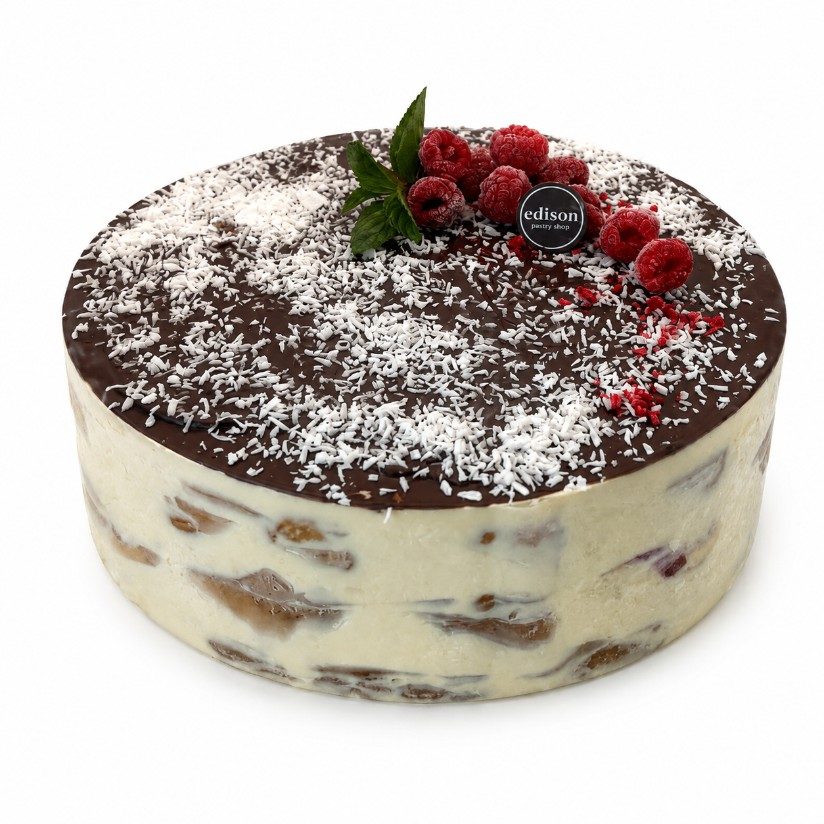
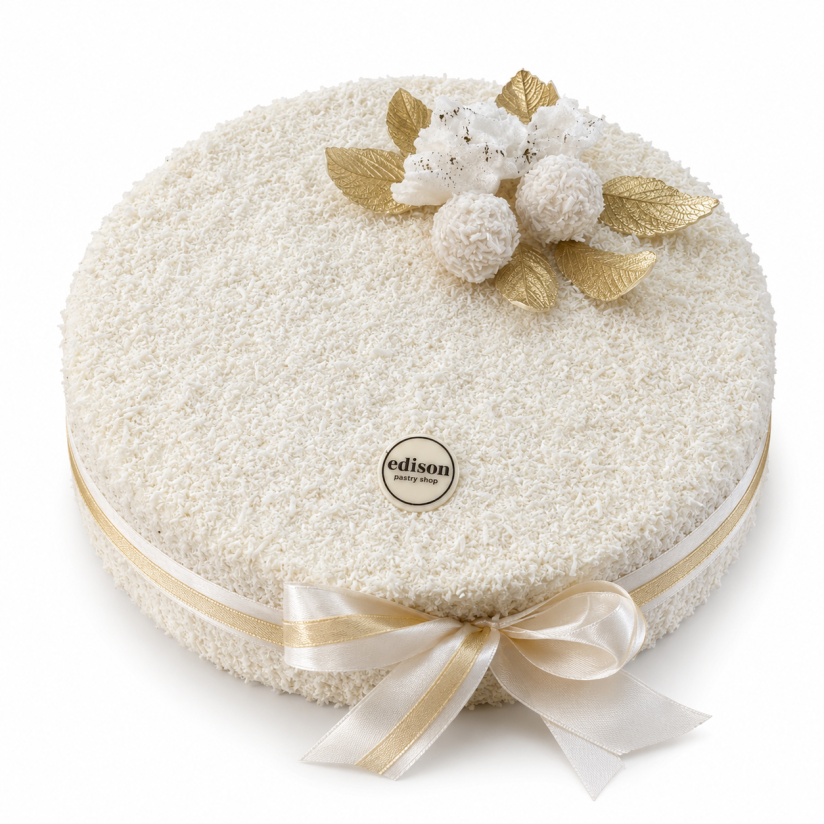
“Rafaello” Cake — a delicate coconut cake for special occasions
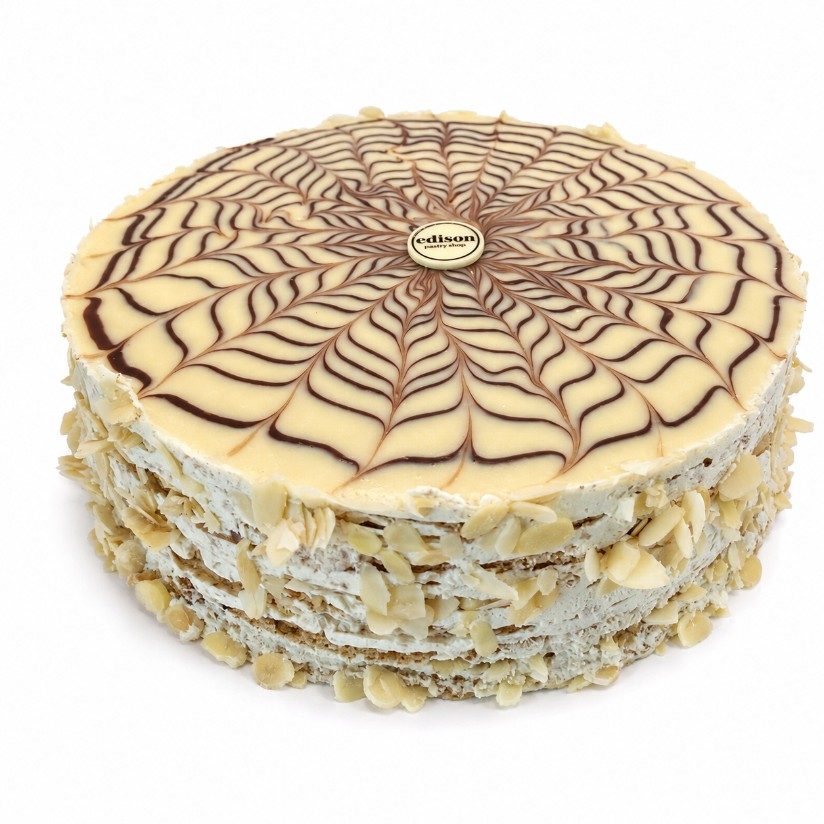
This cake is all about tenderness: coconut, cream, almonds, and white chocolate, without a single harsh note. It’s light both inside and out, so it looks great on a festive table—especially when the table setting features light colors.
What Does It Taste Like?
Coconut takes center stage here, but it’s not dry: the cream makes it soft and moist. White chocolate adds a rich sweetness, while almonds provide a light nutty note and a crunchy texture. The flavor is delicate, without any tartness or chocolate bitterness, so this cake rarely fails to please anyone.
What occasions is it suitable for?
“Rafaello” is more often chosen than other cakes for weddings, engagements, and anniversaries—this light-colored cake fits right in with festive table settings. It’s also a great choice for International Women’s Day, birthdays, christenings, and family dinners where both children and adults are gathered around the table.
Weight and Servings
A whole cake weighs 1.8 kg and yields 12 servings of approximately 150 g each. It’s enough for a group of up to twelve guests.
How to Order in Kharkiv
The price for a whole cake is 1560 UAH, and a slice is 130 UAH. The cake is made fresh for your event date; please place your order at least two days in advance. Delivery within Kharkiv or pickup available.
Note: This product contains nuts—please let us know if any of your guests have allergies.
The History of the Coconut-Almond Dessert
The cake is named after the famous candies with coconut flakes and whole almonds inside, which the Italian company Ferrero released in 1990. The candies were named in honor of the artist Raphael Santi—as part of the same series of “artistic” names used for the brand’s other sweets.
Coconut in European Confectionery
Coconut itself made its way into European desserts much earlier—in the 19th century, when colonial trade made dried coconut flakes widely available. At first, it was used to bake simple coconut macaroons; later, coconut began to be combined with white chocolate and cream, since all three flavors are milk-based and complement each other well.
Why Almonds?
The “coconut and almond” pairing isn’t a marketing gimmick, but rather a time-honored principle of pastry-making: soft, fibrous coconut flakes need something firm to provide a textural contrast. Almonds work better than other nuts because their flavor is more neutral and doesn’t overpower the coconut. Our cake is built on this very combination—with the difference that instead of candy, it’s a full-fledged creamy dessert.

 ~2.3 kg