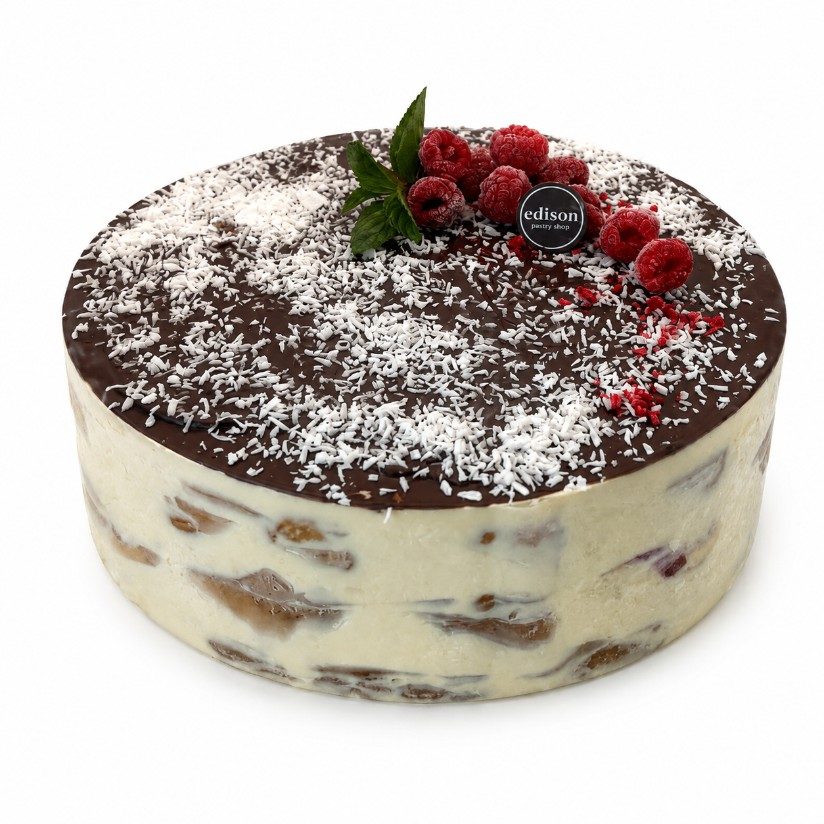
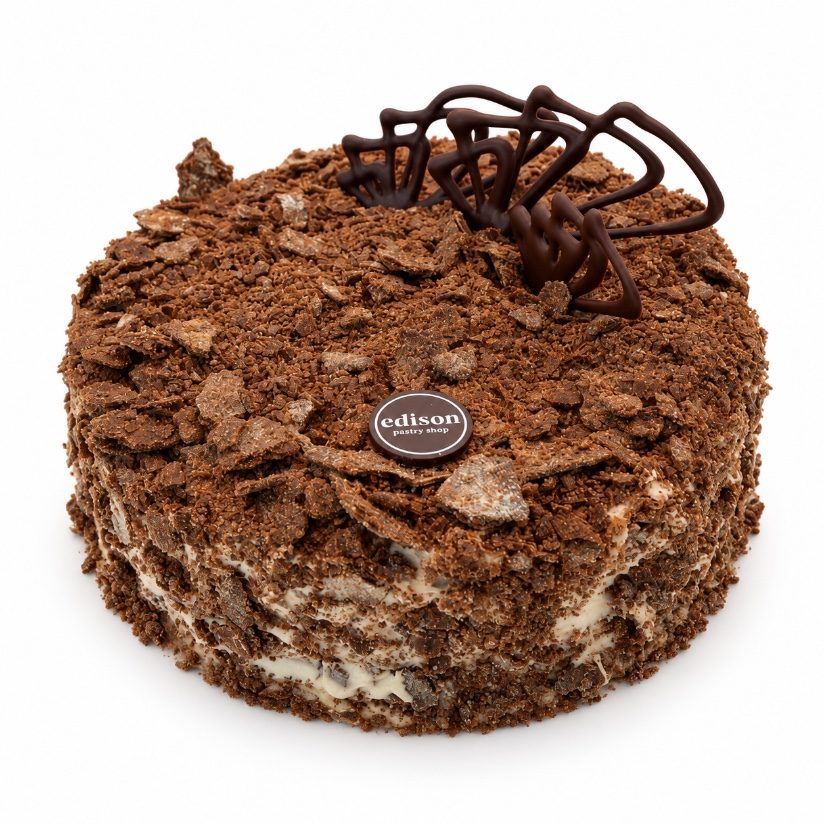
Chocolate “Napoleon” for a Special Occasion<br /><br /><br /><br />It’s the same layered “Napoleon,” but in a chocolate version: cocoa is added to the layers and the cream, transforming the cake from a delicate, creamy treat into a rich, indulgent one. For those who love the classic but want more depth.<br /><br /><br /><br />## What It Tastes Like<br /><br /><br /><br />The chocolate here isn’t heavy or bitter—it adds depth rather than sharpness. The texture remains recognizable: thin layers, plenty of cream—everything is soft and melts in your mouth. The cake is smaller and more compact than the classic “Napoleon,” so the flavor feels more concentrated.<br /><br /><br /><br />## What occasions is it suitable for?<br /><br /><br /><br />It’s perfect for a birthday, a small family dinner, an office party, International Women’s Day (March 8) or Valentine’s Day (February 14), or New Year’s. Because of its compact size, it’s often chosen when there aren’t many guests and a large cake simply wouldn’t be eaten.<br /><br /><br /><br />## Weight and Servings<br /><br /><br /><br />A whole cake weighs {weight-whole} and yields {pieces} servings of approximately {weight-slice} each. Designed for a group of four to six people—it’s the smallest cake in our catalog.<br /><br /><br /><br />## How to Order in Kharkiv<br /><br /><br /><br />The price for a whole cake is {price-whole}, and a slice is {price-slice}. The cake is made to order for your date—orders must be placed at least two days in advance. Delivery within Kharkiv and pickup are available.
How Chocolate Found Its Way into European Cakes<br /><br /><br /><br />The chocolate version of the “Napoleon” is younger than the cake itself—not because no one thought to make it sooner, but because solid chocolate suitable for baking simply didn’t exist for a long time.<br /><br /><br /><br />## First, There Was the Drink<br /><br /><br /><br />The Spanish brought cocoa to Europe in the 16th century, and for nearly three hundred years, chocolate remained exclusively a drink—hot, thick, and expensive. It found its way into confectionery only in the form of cocoa powder, and even that was greasy and lumpy.<br /><br /><br /><br />## Two inventions that changed everything<br /><br /><br /><br />In 1828, the Dutchman Conrad van Houten invented a press that separated cocoa butter from the powder—cocoa became dry and uniform. In 1847, the English firm Fry mixed the powder with butter and sugar for the first time, producing an edible bar. And in 1879, the Swiss Rudolf Lindt invented conching, which made chocolate smooth and melt-in-your-mouth.<br /><br /><br /><br />Only then could chocolate be incorporated into creams and batter. That is why almost all classic European chocolate cakes are desserts from the second half of the 19th century or later, even though the foundations upon which they are built are much older.

 ~2.3 kg