Oatmeal Cookies — A Classic with Tea
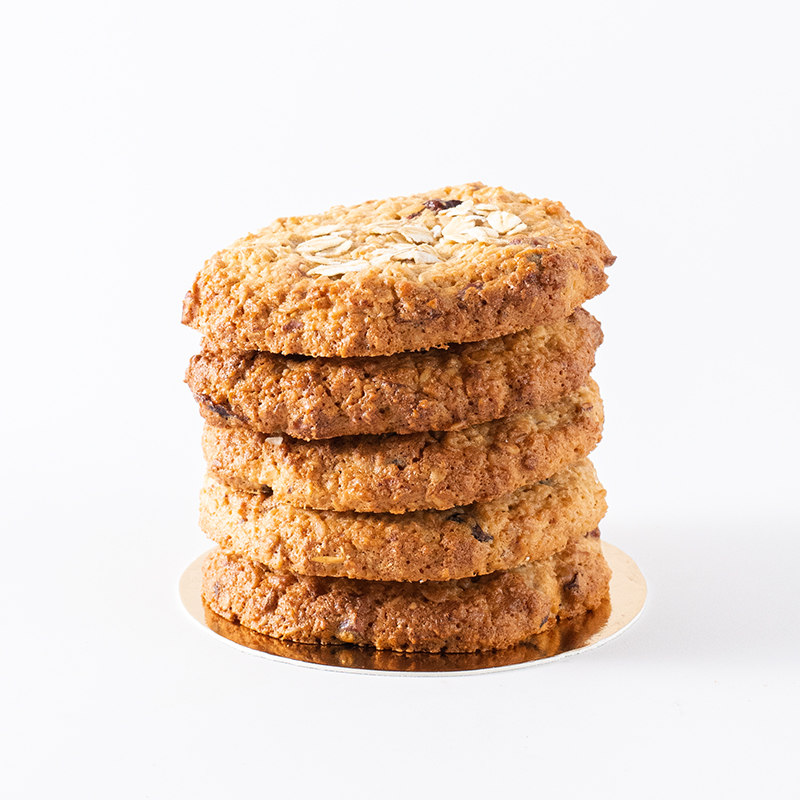
The same cookies with a flavor familiar from childhood: an oatmeal base, almond aroma, and candied fruit. Crispy on the outside, soft on the inside.
What Does It Taste Like?
The oats give it a dense, slightly grainy texture and a subtle, earthy flavor. The almond aroma adds warmth, while the candied fruit provides sweet accents. The cookies aren’t cloying—they’re more filling than sweet.
When to enjoy them
With tea or coffee, as a snack, on the go, for kids to take to school, during office breaks, or at a buffet. People often buy them in a set of several varieties—the cookies keep well and don’t need to be refrigerated.
Size and Weight
Sold individually; one cookie weighs approximately 40 g. Price: 40 UAH.
How to Order in Kharkiv
Order on our website or pick them up at our coffee shops. Delivery within Kharkiv and pickup are available.
The History of Oat Cookies
Oats are a grain that was long considered second-rate in Europe, which is why oat cookies appeared relatively late.
Feed or Food
For centuries, the English looked down on oats: in his famous 1755 dictionary, Samuel Johnson defined it as a grain used to feed horses in England and people in Scotland. The Scots retorted that this was precisely why England had good horses and Scotland had good people.
In Scotland, oats were indeed a staple of the diet: they were used to make porridge and flat oat cakes, which were baked on a griddle.
Cookies from a Box
Modern oatmeal cookies are an American invention and a relatively recent one at that. In the late 19th century, a company that produced rolled oats began printing recipes right on the packaging—it was a way to explain to customers why they should buy oats if they weren’t going to make porridge. The recipe for oatmeal cookies turned out to be the most successful of them all and spread throughout the country.
Why They Don’t Go Stale
Oatmeal absorbs and retains moisture better than wheat flour. Because of this, oatmeal cookies stay soft on the inside much longer than other types—which is exactly why they were traditionally taken on trips.

 ~2.3 kg