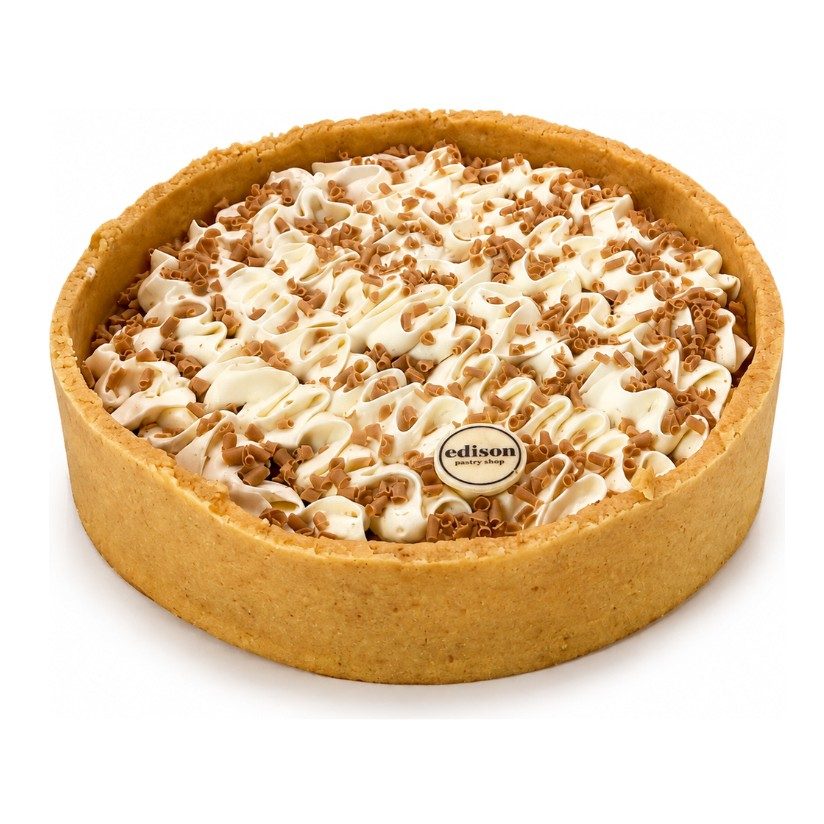
“Banoffee” Cake for a Special Occasion
An English dessert made from three simple ingredients: boiled caramel, bananas, and cream. No complicated flavors—that’s exactly why people ask for “Banoffee” so often.
What It Tastes Like
The caramel is thick and chewy, with a deep, toasty sweetness. The banana softens it and adds moisture, while the cream cheese keeps the dessert from becoming cloying. The texture is soft throughout, so the cake is eaten quickly and easily—it’s a dessert “for tea and conversation.”
What occasions is it perfect for?
Birthdays, family dinners, children’s parties, get-togethers with friends, and office tea parties. It’s one of the safest choices when there are children among the guests: almost everyone likes banana and caramel, and there are no strong or unusual flavors here.
Weight and Servings
A whole cake weighs 1.6 kg, which makes 12 servings of approximately 145 g each. It’s enough for a group of up to twelve guests.
How to Order in Kharkiv
The price for a whole cake is 1296 UAH, and a slice is 108 UAH. The cake is made to order for your date; orders must be placed at least two days in advance. Delivery is available within Kharkiv, or you can pick it up from Edison coffee shops.
The History of the “Banoffee” Cake
This is one of the few desserts for which the year, the village, and the creators’ last names are all known—and there are even surviving accounts from those involved.
East Sussex, 1971
The dessert was invented at The Hungry Monk restaurant in the village of Jevington in southern England by owner Nigel McKenzie and head chef Ian Dowding. They took an American coffee and toffee pie—which they didn’t like—as their starting point and began to rework it. The coffee was removed, bananas were added—and the flavor finally came together.
A Name Made from Two Words
The name was created by combining “banana” and “toffee.” The restaurant added the dessert to its menu, and within a few years, people began ordering it specifically—they would travel to the small village just for this one cake. The recipe spread to English pubs, then to supermarkets, and by the 1990s, “Banoffee” was already on the list of national favorite desserts.
The Debate Over Authorship
In 1994, the restaurant officially claimed to be the creator—and immediately faced objections. It turned out that similar recipes using boiled condensed milk had been published before, and the technique of boiling a can of condensed milk until it caramelized was a folk tradition and widely known. The authorship of the idea itself remains disputed, but no one disputes the specific combination with bananas or the name.

 ~1.7 kg