“Medovik” Cake for Any Celebration
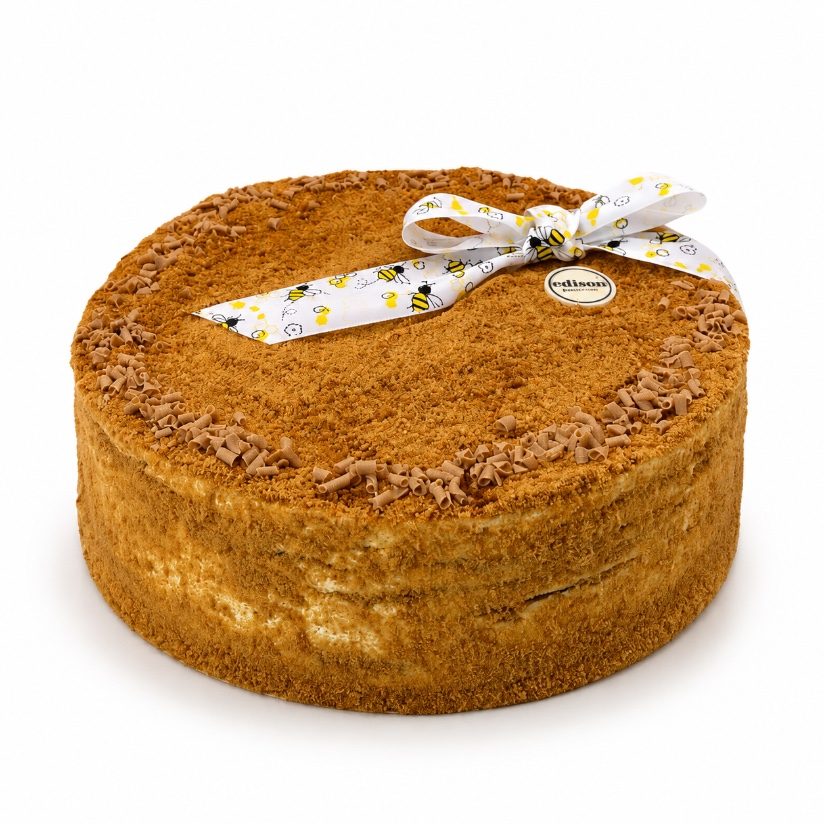
Medovik is the most homemade-style cake on the menu. Thin honey layers, a cream and sour cream filling, and a night in the fridge—which makes the layers soft. Without this resting period, there’s no Medovik.
How it tastes
The honey in the layers provides a warm, caramel-like sweetness and a distinctive aroma, while the sour cream in the filling adds a slight tang that keeps the cake from becoming cloying. The texture is soft and moist; a slice melts effortlessly in your mouth. It’s a flavor most people remember from their childhood.
What occasions is it suitable for?
Medovnik is served whenever family gathers around the table: birthdays, parents’ anniversaries, christenings, memorial and holiday dinners, family reunions, Christmas, and New Year’s. It’s a crowd-pleaser that appeals to almost everyone—from children to the oldest guests.
Weight and Servings
A whole cake weighs 1.6 kg and yields 12 servings of approximately 110 g each. It’s enough for a group of up to twelve guests.
How to Order in Kharkiv
The price for a whole cake is 1140 UAH, and a slice is 95 UAH. The cake is prepared for your chosen date; orders must be placed at least two days in advance. Delivery is available throughout Kharkiv, or you can pick it up from Edison coffee shops.
The History of Honey Cake
Honey was Europe’s primary sweetener before sugar became widely available—that is, until around the 18th century. Therefore, honey-based baked goods predate any sugar-based cakes.
Monasteries and Gingerbread
In medieval Europe, honey dough was baked primarily at monasteries: they kept apiaries there, and honey was the only sweetener that could be stored for years. This is how German Lebkuchen from Nuremberg and Polish gingerbread from Toruń came to be—dense, spiced honey cakes that could be stored for months without spoiling.
The Legend of the Empress
The most famous story about the cake’s origins is a court legend. According to legend, Alexander I’s wife could not tolerate honey, and a new pastry chef, unaware of this, served her a honey cake. Instead of anger, he received praise—she liked the cake because the honey in the layers was no longer detectable.
There is no documentary evidence to support this story, but it illustrates the main principle well: in a medovik, honey functions not as a flavor but as an aroma and texture. That is precisely why even those who do not eat honey in its pure form love it.

 ~2.3 kg