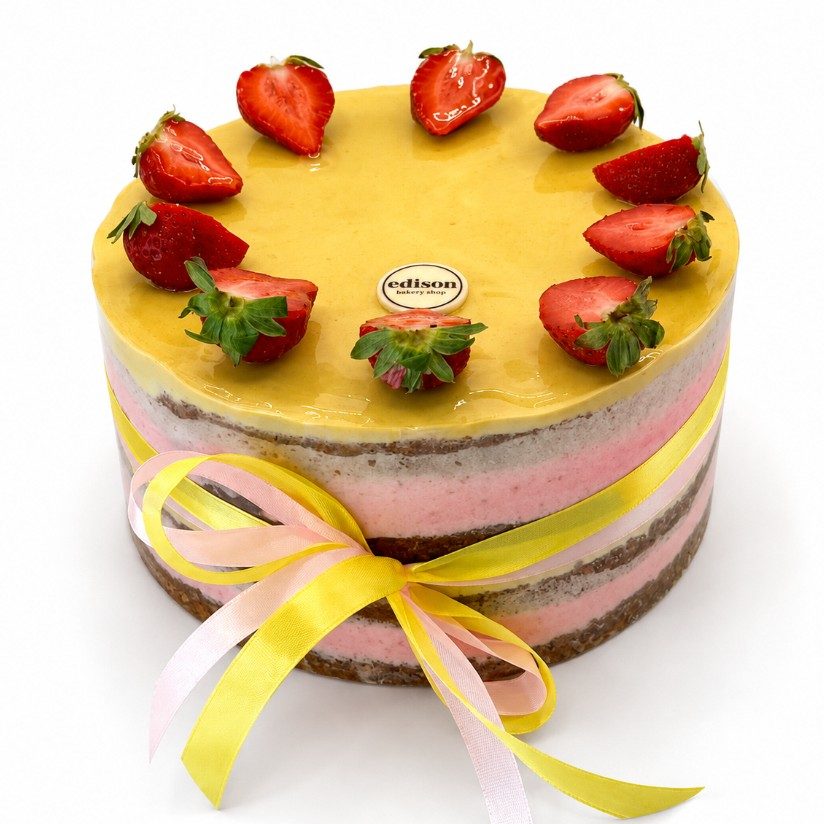
Yogurt Cake — A Light Dessert for a Special Occasion
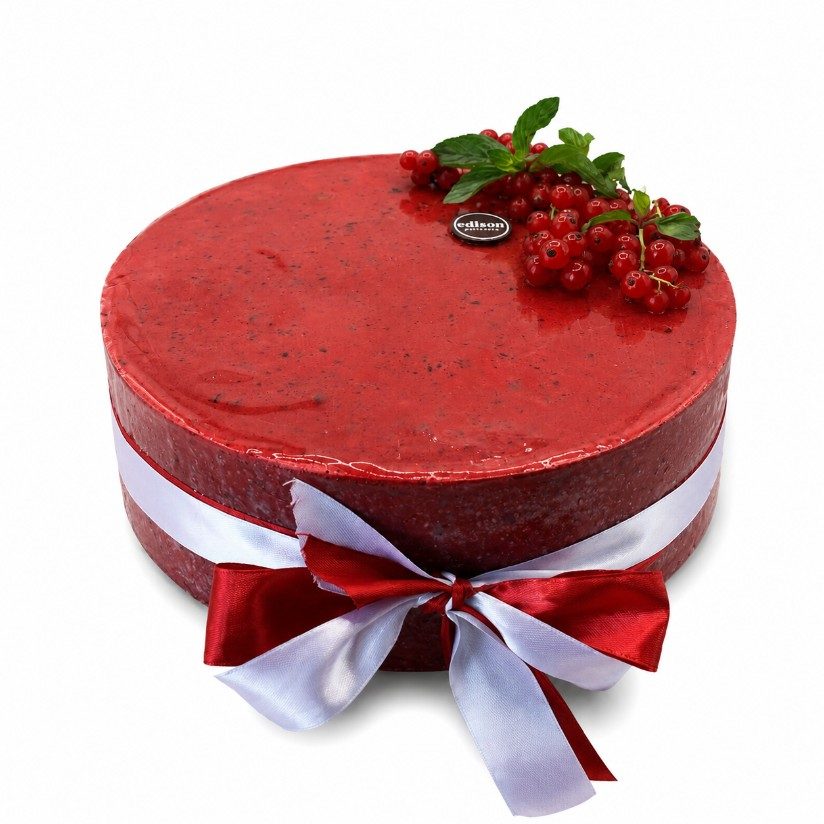
The lowest-calorie cake on the menu. Instead of heavy buttercream, it features a yogurt base with fresh fruit, making the dessert light and almost weightless.
How does it taste?
The base is delicate and airy, with a slight milky tang. The fruit adds freshness and juice. The sweetness is moderate—the cake doesn’t leave you feeling heavy and goes down well even in the heat, when you don’t feel like creamy or chocolate desserts.
What occasions is it suitable for?
Summer birthdays, children’s parties, family dinners, graduations, and outdoor celebrations. It’s often chosen when there are guests who are watching their diet or avoid fatty foods.
Weight and Servings
A whole cake weighs 1.2 kg and yields 12 servings of approximately 100 g each. It’s enough for a group of up to twelve guests.
How to Order in Kharkiv
The price for a whole cake is 1140 UAH, and a slice is 95 UAH. The cake is prepared for your chosen date; orders must be placed at least two days in advance. Delivery within Kharkiv or pickup available.
The History of Yogurt
Yogurt predates most European dairy products, but its entry into Western cuisine came surprisingly late and began with scientific research.
The Steppes and Nomads
Sour milk appeared in places where people carried milk with them: in Central Asia, the Balkans, and the Middle East. Fermentation wasn’t a recipe but a necessity—it prevented spoilage. The word “yogurt” comes from Turkic languages and roughly means “thickened.”
Mechnikov and the Theory of Longevity
In the early 20th century, biologist Ilya Mechnikov, a Nobel Prize laureate, took note of the longevity of Bulgarian peasants and linked it to sour milk. His work made yogurt fashionable in Europe as a health food.
A Pharmacy in Barcelona
Riding this wave, in 1919 the Spaniard Isaac Carasso began selling yogurt in Barcelona pharmacies—as a remedy for children with digestive disorders. He named the company after his son Daniel: Danone. The product eventually made its way from pharmacy shelves to supermarkets, and from there to pastry shops, where it is prized for the very qualities that once made it a valued medicine: its lightness and tangy flavor.

 ~2.3 kg