“Velvet” in a Glass — a vibrant individual dessert
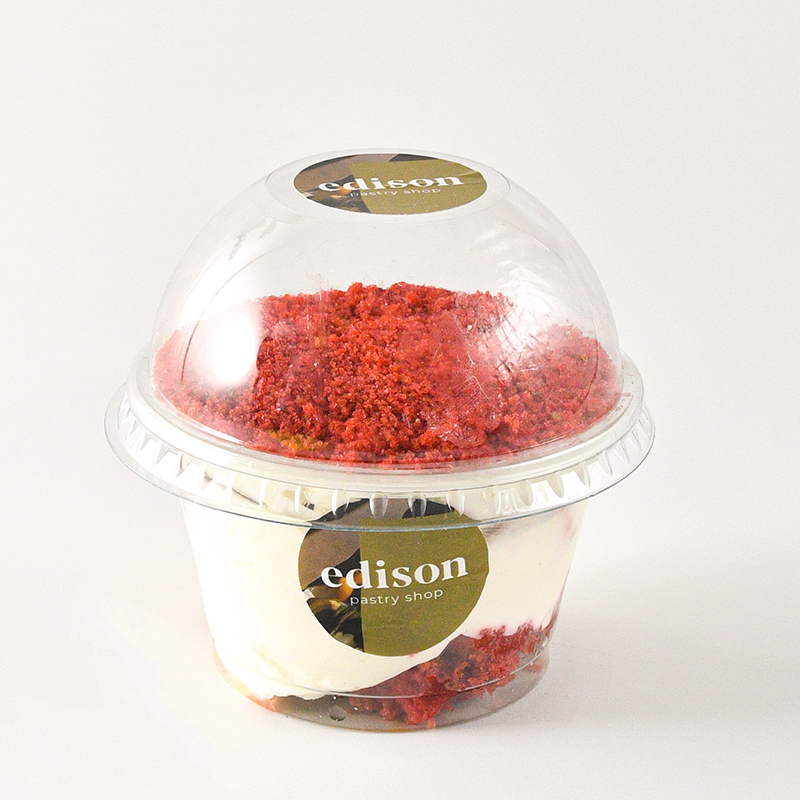
Red velvet in a glass: layers of rich red sponge cake and creamy frosting, visible through the glass. One of the most visually striking desserts on the menu.
How does it taste?
The sponge cake is moist, with a subtle hint of cocoa; the cream is rich, with a soft, slightly salty and milky tang. The flavor is more subtle than you might expect from such a vibrant appearance: the contrast between the color and the delicate flavor is intentional.
When to Order It
Buffets, bachelorette parties, themed parties, Valentine’s Day, children’s parties, photo booths, office celebrations. Order it when you want the dessert to stand out on the table.
Size and Weight
Served in a glass; each serving is approximately 170 g. Price: 135 UAH.
How to order in Kharkiv
Order on our website or pick it up at our coffee shops. Delivery within Kharkiv and pickup are available.
The Color Red in Food: A Brief History
The rich red in a dessert is a color with a long and rather unexpected history behind it.
An Insect More Valuable Than Silver
Until the 19th century, the world’s primary red dye was cochineal—the dried females of an insect that lives on cacti in the Americas. After the conquest of Mexico, the Spanish turned it into an export commodity that was second only to silver in value. The production process was kept secret for over two hundred years: for a long time, Europeans could not figure out whether it was a plant or an animal.
Cochineal is still used today—under the name carmine.
Beets and War
In the 20th century, as synthetic dyes became available, another tradition emerged: during World War II in the U.S., when cocoa and sugar were in short supply, beets were added to baked goods. It provided color, moisture, and a touch of sweetness. Many classic recipes for red cakes still call for beet juice from that very era.
Why Red Works
Research on food perception shows that the color red heightens the expectation of sweetness: people rate the same dessert as sweeter if it’s bright red. Pastry chefs have been taking advantage of this effect for a long time—they just didn’t know what to call it back then.

 ~2.3 kg